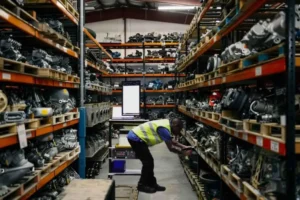

Managing Obsolescence Risk in Electrical and Electronics Inventory
Electrical and electronics businesses operate in an environment where products, components, technologies, and specifications can change quickly. A product that is commercially relevant today may have limited demand tomorrow because of a technology upgrade, product replacement, specification change, or changing customer requirements.
This makes obsolescence risk in electrical and electronics inventory an important concern for businesses carrying large or diverse inventories.
Inventory obsolescence occurs when stock loses its practical or commercial value because it is no longer required, supported, compatible, or demanded in the market. In electronics, this risk can develop faster than in many other industries.
A component may still be physically usable but may no longer be commercially viable. Similarly, an electrical product may remain in the warehouse while customers have already shifted toward a newer specification.
The challenge for management is therefore not simply to maintain sufficient inventory. It is to identify potential obsolescence early and take action before valuable working capital becomes permanently locked in ageing stock.
Why Obsolescence Risk Is Higher in Electronics Inventory
Electrical and electronics inventory can become obsolete for several reasons.
Technology changes rapidly, and manufacturers regularly introduce newer versions of products and components. Customer preferences can also change as new technologies become available.
Common causes include:
- Product technology changes
- New product launches
- Component replacement
- Manufacturer discontinuation
- Changes in industry standards
- Changing customer specifications
- Long inventory holding periods
- Excess purchasing
- Weak demand forecasting
- Poor visibility of ageing inventory
These factors can turn slow-moving inventory into obsolete inventory if they are not identified early.
For businesses, the financial impact can be significant because obsolete stock represents capital that may no longer generate its expected return.
Understanding the Difference Between Slow-Moving and Obsolete Inventory
Not every slow-moving item is obsolete.
This distinction is important.
A slow-moving electrical component may still have future demand. An ageing electronics product may still be required for maintenance or replacement purposes.
Obsolete inventory, however, generally has little or no realistic future demand or commercial usefulness.
Therefore, businesses should avoid automatically disposing of old inventory.
Instead, inventory should be classified based on factors such as:
- Last movement date
- Current demand
- Future demand
- Product lifecycle
- Manufacturer status
- Customer requirements
- Technical compatibility
- Replacement availability
- Inventory value
This creates a more accurate picture of actual inventory risk.
Inventory Ageing as an Early Warning System
One of the most effective tools for managing obsolescence is inventory ageing analysis.
Ageing analysis categorises inventory according to how long it has remained without movement.
For example, businesses may create categories such as:
0–90 Days: Normal or active inventory
91–180 Days: Monitor movement
181–365 Days: Slow-moving inventory
365+ Days: High obsolescence risk
The exact ageing periods should depend on the business, product lifecycle, and market characteristics.
Ageing analysis allows management to identify potential problems before inventory becomes completely obsolete.
The key is to act on the information rather than simply generating an ageing report.
Product Lifecycle Matters
Electrical and electronics products often follow a defined product lifecycle.
Products move from introduction to growth, maturity, and eventually decline or discontinuation.
Inventory decisions should consider where each product sits within this lifecycle.
If a product is approaching the end of its commercial life, purchasing large quantities may create unnecessary risk.
For example, buying six months of stock for a component that may be replaced by a newer technology within three months can create significant excess inventory.
This is why purchasing decisions should not depend solely on historical consumption.
They should also consider future product relevance.
Manufacturer Discontinuation Can Create Major Risk
Manufacturer announcements can have a direct impact on inventory value.
When an original equipment manufacturer discontinues a component, businesses holding large quantities of that item may suddenly face limited demand.
This is particularly important for businesses dealing with:
- Electronic components
- Industrial control equipment
- Sensors
- Circuit boards
- Power supplies
- Communication equipment
- Automation components
- Electrical accessories
Monitoring manufacturer product lifecycle information can help businesses identify potential risks earlier.
Where appropriate, purchasing and inventory teams can adjust procurement plans before excess stock accumulates.
Excess Inventory and Obsolescence
Excess inventory is one of the biggest contributors to obsolescence risk.
When businesses purchase more stock than required, the additional inventory remains exposed to ageing.
Excess stock may result from:
- Overestimating demand
- Minimum order quantities
- Bulk purchasing
- Poor forecasting
- Project cancellations
- Changes in customer requirements
- Duplicate procurement
- Inaccurate inventory records
The problem becomes more serious when excess inventory remains unnoticed in the warehouse.
Regular inventory analysis can help identify these quantities and create an action plan before the stock loses further value.
Identifying High-Risk Inventory
Not every inventory item carries the same level of obsolescence risk.
Businesses should prioritise inventory based on both age and value.
For example, a low-value obsolete component may have limited financial impact, while a high-value electronics assembly sitting unused for several months may require immediate management attention.
A useful risk assessment can consider:
Inventory Value × Age × Demand Risk × Product Lifecycle
This allows businesses to focus resources on the inventory that creates the greatest financial exposure.
Demand Forecasting Needs Continuous Review
Historical consumption is useful, but it should not be the only basis for inventory planning.
Electrical and electronics demand can change because of:
- New technologies
- Customer projects
- Market trends
- Product substitutions
- Economic conditions
- Competitor products
- Regulatory changes
Forecasts should therefore be reviewed regularly.
When expected demand decreases, procurement quantities should also be reassessed.
This helps prevent the common situation where purchasing continues according to an old forecast while actual demand has already changed.
Inventory Visibility Supports Better Decisions
A strong electronics inventory management system should provide management with a clear view of stock status.
Important information includes:
- Current quantity
- Inventory value
- Last movement
- Average consumption
- Location
- Open purchase orders
- Open customer orders
- Product lifecycle status
- Replacement products
- Ageing category
Without this information, businesses may continue purchasing items they already have in excess.
Better visibility connects procurement, warehouse, sales, finance, and management decisions.
What Should Businesses Do With At-Risk Inventory?
Once potential obsolete inventory has been identified, businesses need a structured response.
Possible actions may include:
-
Review Future Demand
Check whether existing customers or upcoming projects still require the item.
-
Stop or Reduce Procurement
Avoid increasing exposure by continuing to purchase unnecessary stock.
-
Identify Alternative Applications
Some components may be usable in other products, projects, or locations.
-
Transfer Inventory
If one location has excess stock while another location has demand, an internal transfer may reduce unnecessary purchasing.
-
Commercial Action
Where appropriate, businesses may consider promotions, special pricing, bundled sales, or other liquidation strategies.
-
Supplier Discussions
Depending on contractual terms, businesses may explore returns, replacements, or other supplier arrangements.
-
Controlled Disposal
If inventory has genuinely lost its commercial or technical value, disposal may be considered after appropriate approvals and accounting treatment.
The Role of Physical Inventory Verification
System data alone cannot always explain why inventory is ageing.
Physical verification can identify issues such as:
- Incorrect item identification
- Duplicate stock records
- Unrecorded movements
- Damaged products
- Incorrect quantities
- Missing stock
- Items stored in the wrong location
A professional electrical inventory management process should therefore combine system analysis with physical verification.
Accurate physical inventory data improves the quality of ageing and obsolescence decisions.
Building an Obsolescence Control Process
Businesses can reduce future risk by creating a regular review process.
A practical framework can include:
Step 1 — Identify ageing inventory
Find items with extended periods without movement.
Step 2 — Analyse demand
Determine whether future consumption is realistic.
Step 3 — Review product lifecycle
Check whether the product is active, approaching replacement, or discontinued.
Step 4 — Assess financial exposure
Prioritise high-value inventory.
Step 5 — Assign an action
Each high-risk item should have a clear action owner and timeline.
Step 6 — Track the result
Review whether the action reduced inventory exposure.
This changes inventory management from a reactive activity into a proactive control mechanism.
From Obsolete Stock to Inventory Intelligence
Managing obsolescence is not simply about removing old stock from the warehouse.
It is about understanding why that stock became obsolete in the first place.
If a business repeatedly experiences obsolete inventory, management should investigate the underlying causes.
Was purchasing based on outdated forecasts?
Were minimum order quantities too high?
Was product lifecycle information ignored?
Were inventory levels excessive?
Was there insufficient communication between sales and procurement?
Finding these root causes can prevent the same problem from recurring.