Inventory Ageing: The Management Report Every Business Should Track
Inventory is one of the largest investments for most businesses. Whether you’re a manufacturer, retailer, wholesaler, or distributor, every product sitting in your warehouse represents capital that should eventually generate revenue. However, not all inventory moves at the same pace. Some products sell quickly, while others remain on shelves for months or even years.
Without proper visibility into how long inventory has been sitting in storage, businesses risk tying up working capital, increasing storage costs, and accumulating dead stock. This is why the Inventory Ageing Report is considered one of the most valuable management reports for inventory control.
An inventory ageing report helps businesses identify slow-moving and obsolete inventory before it becomes a financial burden. Instead of relying solely on current stock levels, the report provides valuable insights into the age of inventory, enabling smarter purchasing, production, and sales decisions.
In this guide, we’ll explain what an inventory ageing report is, why it matters, and how businesses can use it to improve operational efficiency and profitability.
What Is an Inventory Ageing Report?
An Inventory Ageing Report is a management report that categorizes inventory based on how long it has remained in stock.
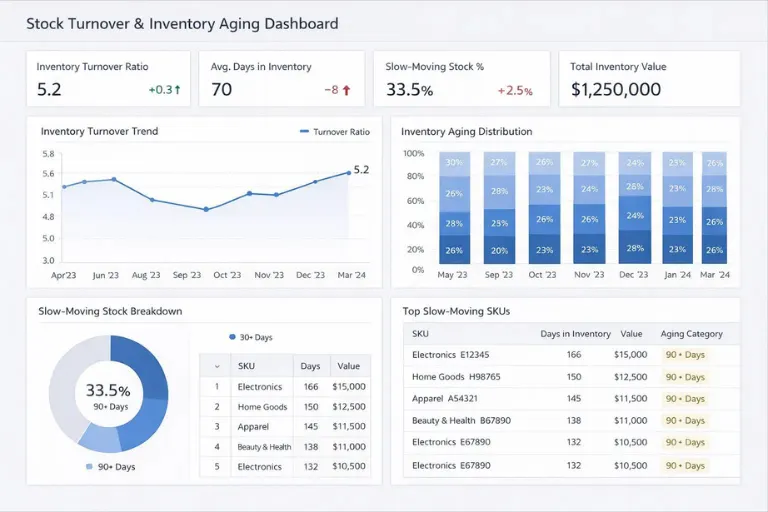
Rather than showing only the quantity available, the report groups inventory into time-based categories such as:
- 0–30 Days
- 31–60 Days
- 61–90 Days
- 91–180 Days
- 181–365 Days
- More than 365 Days
This classification allows businesses to quickly identify products that are moving normally, slowing down, or becoming obsolete.
The report provides a clear picture of inventory health and helps management make proactive decisions before inventory becomes dead stock.
Why Inventory Ageing Matters
Many businesses monitor inventory quantities but overlook how long products have been sitting in storage.
Inventory age is just as important as inventory quantity because older inventory often creates hidden financial and operational risks.
Monitoring inventory ageing helps businesses:
- Improve cash flow
- Reduce excess inventory
- Prevent dead stock
- Lower warehouse costs
- Improve purchasing decisions
- Increase inventory turnover
Instead of reacting after inventory problems arise, businesses can identify risks early and take corrective action.
Benefits of an Inventory Ageing Report
-
Identifies Slow-Moving Inventory
The primary purpose of an inventory ageing report is to highlight products that are no longer selling at expected rates.
Management can quickly identify inventory requiring promotional activities, discounts, or purchasing adjustments.
Early detection reduces the risk of products becoming unsellable.
-
Improves Cash Flow
Unsold inventory ties up working capital.
The ageing report helps businesses identify inventory that is locking valuable cash inside warehouses.
By reducing ageing inventory, companies can release capital for:
- Business expansion
- Marketing
- Equipment upgrades
- Product development
- Operational improvements
Healthy inventory movement directly improves financial flexibility.
-
Reduces Storage Costs
Older inventory continues occupying warehouse space.
This results in ongoing expenses such as:
- Storage rent
- Insurance
- Utilities
- Inventory handling
- Warehouse labor
- Security
Managing ageing inventory reduces carrying costs and improves warehouse utilization.
-
Supports Better Purchasing Decisions
Inventory ageing reports reveal purchasing patterns that may require adjustment.
If products consistently appear in older ageing categories, purchasing quantities may be too high.
Management can use these insights to optimize future procurement decisions.
-
Prevents Dead Stock
Inventory does not become dead stock overnight.
It typically progresses through several ageing stages before reaching the point where it has little or no market demand.
Regular monitoring allows businesses to take corrective action before products become financially unrecoverable.
What Information Does an Inventory Ageing Report Include?
A comprehensive inventory ageing report typically contains:
- Product name
- SKU or Item Code
- Inventory quantity
- Inventory value
- Date received
- Number of days in stock
- Ageing category
- Inventory location
- Inventory turnover status
Some advanced inventory management systems also include sales history, supplier details, and reorder recommendations.
Common Causes of Ageing Inventory
Several factors contribute to inventory remaining in storage longer than expected.
Poor Demand Forecasting
Overestimating customer demand often leads to excess inventory.
Products remain unsold because purchasing decisions exceed actual market requirements.
Overstocking
Large purchase quantities intended to secure supplier discounts may increase inventory ageing if demand slows.
Seasonal Demand Changes
Products purchased for seasonal events may remain unsold once the selling season ends.
Product Obsolescence
Technology, fashion, and customer preferences change rapidly.
Products that were once in demand may gradually lose market value.
Inefficient Inventory Planning
Lack of inventory visibility often results in repeated purchasing despite sufficient existing stock.
How Businesses Should Use an Inventory Ageing Report
Simply generating the report isn’t enough.
Businesses should review it regularly and take action based on the findings.
Prioritize Slow-Moving Products
Focus on inventory entering older ageing categories before it becomes obsolete.
Adjust Purchasing Plans
Reduce purchase quantities for products consistently appearing in ageing reports.
Improve Demand Forecasting
Combine ageing data with historical sales trends to improve inventory planning.
Launch Clearance Campaigns
Promotional pricing, product bundles, and discounts can help move ageing inventory before losses increase.
Review Supplier Performance
Long lead times and minimum order quantities often contribute to ageing inventory.
Working closely with suppliers can improve purchasing flexibility.
Best Practices for Managing Inventory Ageing
Businesses can maximize the value of ageing reports by following several best practices.
Review Reports Monthly
Monthly inventory ageing analysis provides early warning signs before inventory problems escalate.
Integrate with Inventory Management Software
Modern inventory systems automatically calculate inventory age and generate real-time ageing reports.
Automation reduces manual work while improving decision-making.
Perform Regular Cycle Counts
Accurate inventory records ensure ageing reports reflect actual warehouse stock.
Monitor Inventory KPIs
Track important inventory metrics alongside ageing reports, including:
- Inventory Turnover Ratio
- Days Inventory Outstanding (DIO)
- Carrying Cost
- Dead Stock Percentage
- Stock Accuracy
These KPIs provide a more complete picture of inventory performance.
Industries That Benefit from Inventory Ageing Reports
Inventory ageing analysis is valuable across many industries, including:
- Manufacturing
- Retail
- Wholesale Distribution
- FMCG
- Pharmaceuticals
- Healthcare
- Automotive
- Electronics
- Food Processing
- eCommerce
Any business managing physical inventory can benefit from monitoring inventory age.
Benefits of Tracking Inventory Ageing
Organizations that consistently monitor inventory ageing experience several long-term advantages:
- Better inventory visibility
- Higher inventory turnover
- Lower carrying costs
- Improved warehouse utilization
- Reduced dead stock
- Better purchasing decisions
- Improved cash flow
- Stronger financial reporting
- Increased operational efficiency
- Greater overall profitability
Inventory ageing becomes a valuable management tool rather than simply another report.
Conclusion
An Inventory Ageing Report is far more than a list of products sitting in storage—it is a powerful decision-making tool that helps businesses maintain healthy inventory levels and improve financial performance. By understanding how long inventory has remained in stock, organizations can identify slow-moving products, prevent dead stock, optimize purchasing, and free up valuable working capital.
Businesses that regularly monitor inventory ageing are better equipped to respond to changing customer demand, reduce unnecessary storage costs, and improve supply chain efficiency. Combined with accurate forecasting and modern inventory management software, inventory ageing analysis supports smarter inventory decisions and long-term business growth.